Introduction
Technology continues to influence how organizations compete, serve customers, manage employees, and develop new products. Artificial intelligence, cloud computing, cybersecurity, automation, data analytics, and digital platforms are no longer isolated technical concerns. They increasingly shape decisions made by executives, managers, entrepreneurs, and professionals across industries.
Keeping up with these developments can be difficult. New tools emerge quickly, established technologies change, and predictions about the future often compete with practical advice about what businesses should do today. For decision-makers, the challenge is not simply finding information about technology. It is understanding which developments matter, how they might affect an organization, and when a new capability deserves investment.
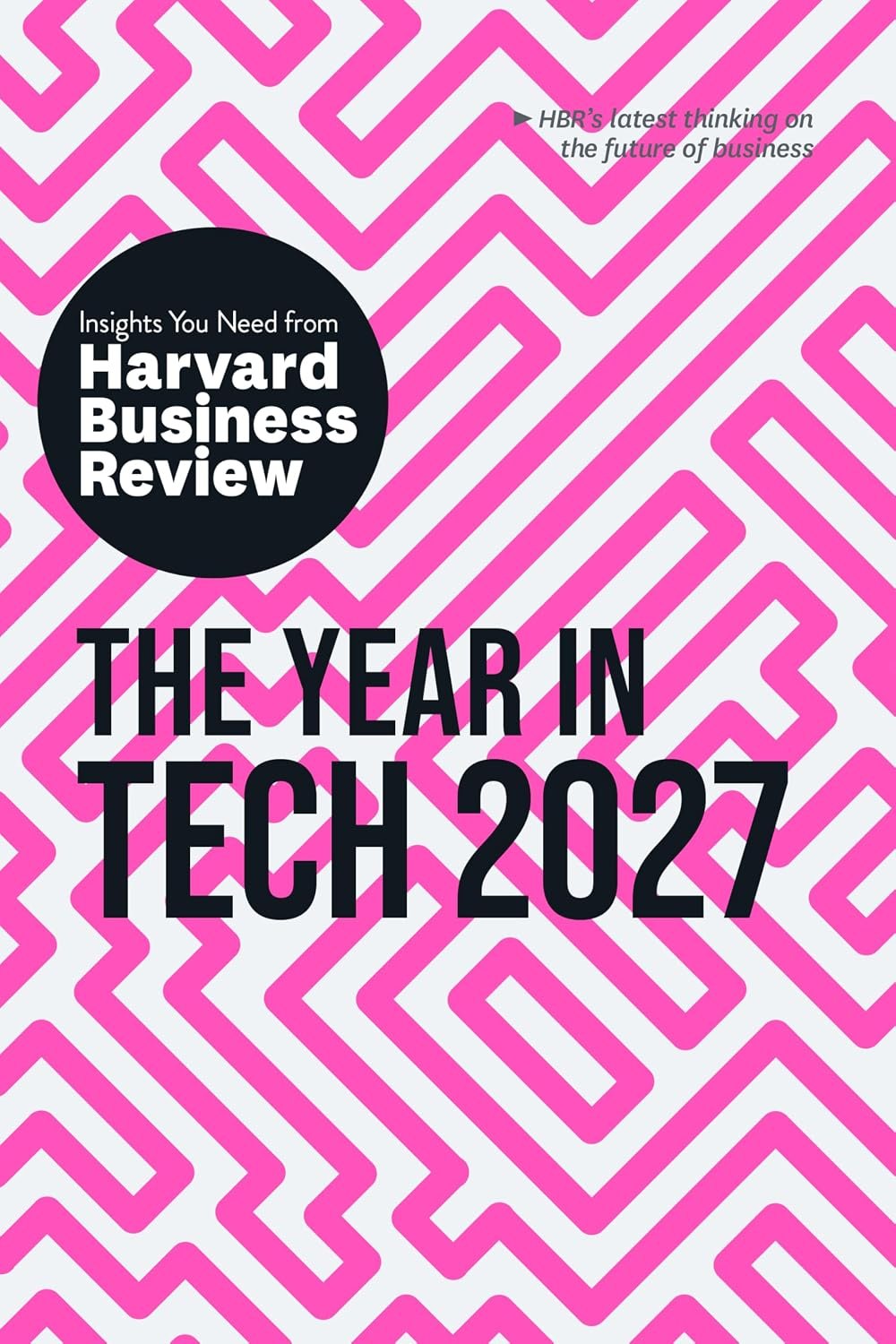
The Year in Tech, 2027: The Insights You Need from Harvard Business Review (HBR Insights Series) is a business and technology publication intended for readers interested in the relationship between technological developments and organizational strategy. The Harvard Business Review Insights Series is associated with management-oriented content that connects business challenges with ideas about leadership, innovation, and organizational performance.
The exact subjects, contributors, chapter structure, and publication details of this particular edition should be confirmed through the current book listing and publisher information. Its title, however, places it within a useful category of annual technology-focused business reading: material intended to help readers reflect on emerging technologies and consider their implications for management and strategy.
An annual technology publication can be valuable because it creates an opportunity to step back from daily headlines and examine broader questions. Which technological capabilities are becoming more relevant? What organizational changes may be necessary to use them responsibly? How should leaders think about innovation, workforce skills, data protection, and long-term investment?
This guide explores the educational value of an annual technology insights publication, ways readers can apply technology-related business ideas, and the factors to consider when using management commentary to support real decisions.
Understanding an Annual Technology Insights Publication
An annual technology publication brings technology-related business questions into a broader management context. Instead of treating every new product or technical development as an independent event, this category of reading encourages readers to consider the wider implications for organizations.
Technology decisions rarely exist in isolation. A business adopting artificial intelligence may also need to change its data practices, employee training, customer-service processes, and internal controls. A company moving more workloads to cloud infrastructure may need to reconsider cybersecurity, supplier relationships, cost management, and disaster recovery.
Similarly, adopting automation can influence job responsibilities, performance measurement, and the way teams coordinate their work. The technical capability is only one part of the decision.
A management-focused technology publication can help readers think about these relationships. It can provide concepts, frameworks, examples, and questions that encourage more deliberate decision-making.
However, readers should distinguish between general management insights and verified facts about a specific technology. An editorial article can help explain a strategic issue, but decisions involving technical architecture, legal compliance, security, or financial commitments may require additional evidence and specialist advice.
Why Technology and Business Strategy Are Closely Connected
Technology can affect an organization’s ability to deliver products and services, but purchasing new tools does not automatically create a competitive advantage.
The value of a technology depends on the problem it addresses, the quality of implementation, the skills of the people using it, and the organization’s ability to measure results.
For example, an analytics platform may provide access to large volumes of data. If managers do not understand the data’s limitations or cannot translate it into decisions, the platform may deliver less value than expected.
Artificial intelligence presents a similar challenge. A system may generate text, summarize information, or automate a repetitive task, but its business value depends on accuracy, integration, oversight, and the consequences of errors.
A technology insights publication can help readers approach these decisions as management questions rather than purely technical purchases. It encourages consideration of objectives, resources, risks, and organizational readiness before committing to an implementation.
The Value of an Annual Perspective
Daily technology news often focuses on announcements, product releases, funding, and immediate reactions. Annual perspectives can serve a different purpose by encouraging readers to consider broader patterns and strategic implications.
A year-focused publication may help readers organize their thinking around questions such as:
- Which technologies deserve closer attention?
- What capabilities might organizations need to develop?
- How could digital transformation change existing business models?
- What risks arise when new systems are adopted too quickly?
- How can leaders distinguish a lasting business opportunity from temporary enthusiasm?
These questions remain useful even when individual technologies evolve. The underlying challenge of evaluating investment, managing change, and protecting customers continues across different technology cycles.
Readers should nevertheless recognize that a publication about 2027 is not necessarily a comprehensive forecast of the year. The title alone does not establish that every major development will be covered or that its conclusions will prove correct.
Key Features and Educational Value
The title identifies the publication as part of the Harvard Business Review Insights Series and positions it around technology-related insights for 2027. The following sections explain the potential value of this type of business reading without assuming unverified chapter titles or specific contents.
1. A Business-Oriented View of Technology
A technology publication designed for business readers generally emphasizes the implications of technology rather than requiring readers to become engineers.
This perspective can help managers understand how digital capabilities relate to customer needs, organizational priorities, productivity, risk, and competitive positioning.
For instance, a manager evaluating automation does not necessarily need to understand every technical detail of a system’s architecture. The manager does need to understand what tasks the system can perform, where human oversight remains necessary, what information it requires, and how its performance will be evaluated.
Business-oriented technology reading can help frame those questions and encourage conversations between technical teams and organizational leaders.
The exact depth and subject coverage of this edition should be checked in its table of contents or publisher description.
2. Strategic Thinking About Emerging Technologies
Emerging technologies often generate strong expectations before their long-term business value is fully established.
Organizations may feel pressure to adopt a new capability because competitors are discussing it or because it receives substantial media attention. A more disciplined approach starts with a specific problem and evaluates whether the technology can address it effectively.
Readers can use technology insights to examine the difference between technological possibility and organizational readiness.
A system may be capable of performing a task, but successful deployment may require clean data, process redesign, employee training, new controls, and ongoing monitoring. Those requirements can determine whether a promising demonstration becomes a sustainable business capability.
A strategic perspective is especially useful for executives who must balance experimentation with financial discipline and operational reliability.
3. Connections Between Technology and Leadership
Technology adoption often changes responsibilities and expectations across an organization. Leaders must explain why a change is happening, establish priorities, allocate resources, and create an environment in which employees can learn new processes.
This is not only a technical challenge. It is also a leadership and communication challenge.
For example, introducing an AI-assisted workflow may affect how employees complete tasks, how managers evaluate work, and how customers receive support. If employees do not understand the purpose of the change or the limits of the new system, adoption may be inconsistent.
Management-focused technology reading can help leaders reflect on the human side of digital transformation, including communication, accountability, training, and organizational culture.
4. Support for Informed Business Discussions
Technology decisions frequently involve people with different areas of expertise. Executives may focus on investment and business outcomes, technical teams on implementation and reliability, legal teams on obligations, and employees on how new systems affect daily work.
A shared set of concepts can make these conversations more productive.
A business technology publication may provide terminology and frameworks that help teams discuss trade-offs without reducing the discussion to a simple question of whether a technology is modern or innovative.
Readers can use the material to prepare discussion questions, organize internal presentations, and identify issues that require additional investigation.
The publication should be treated as a starting point for these discussions, not as a substitute for technical documentation or company-specific analysis.
5. A Resource for Professional Development
Professionals who work with technology but do not specialize in engineering may need to understand broader trends as part of their roles.
Marketing managers, consultants, product managers, operations leaders, entrepreneurs, and business analysts may all benefit from developing a stronger understanding of how technology affects their work.
Annual technology reading can help these professionals broaden their perspective and identify areas where additional learning may be useful.
The greatest value comes from connecting reading to real responsibilities. A marketing professional might investigate data governance and AI-assisted content processes, while an operations manager might focus on automation, workflow redesign, and performance measurement.
Readers should verify the edition’s specific subject coverage before relying on it for a particular professional learning objective.
Important Technology and Business Themes to Explore
The title suggests a technology-focused business publication, but the precise chapter topics of this edition should be verified from the publisher’s information. The following themes illustrate the kinds of questions that make technology and management reading useful.
Artificial Intelligence and Business Operations
Artificial intelligence can support tasks such as summarization, classification, information retrieval, drafting, forecasting, and selected forms of analysis. The usefulness of these capabilities varies according to the task, data quality, system design, and consequences of an incorrect result.
Businesses evaluating AI should start by identifying a clear problem. They can then assess whether the proposed system improves speed, quality, consistency, accessibility, or another measurable outcome.
A pilot project may help determine whether the technology performs well in a controlled environment. However, results from a small test may not transfer directly to a larger deployment. Performance can change when the system encounters different data, unusual requests, or more complex operating conditions.
Organizations also need to consider privacy, security, intellectual property, bias, and accountability. Human review may be essential when outputs affect customers, employees, finances, or other important decisions.
Technology insights are most useful when they help readers move beyond broad claims about AI and ask what a system can reliably do within a particular business process.
Cybersecurity and Digital Trust
As organizations depend more heavily on digital systems, cybersecurity becomes a business concern rather than a responsibility limited to the IT department.
A security incident can interrupt operations, expose confidential information, damage customer trust, and create legal or financial consequences. The potential impact depends on the systems involved, the information affected, and the organization’s ability to respond.
Business leaders do not need to perform every technical security task, but they should understand the importance of access controls, software updates, employee training, incident response, data backups, and supplier risk.
Technology-related management reading can help decision-makers recognize cybersecurity as part of operational resilience and organizational governance.
Practical decisions should still rely on current security guidance, qualified specialists, and the organization’s specific threat model. A general business publication cannot establish whether a particular system is secure.
Data Analytics and Decision-Making
Organizations collect information from customers, transactions, operations, marketing campaigns, and internal systems. Analytics can help convert that information into insights, but data alone does not guarantee sound decisions.
The usefulness of analysis depends on data quality, measurement definitions, context, and the assumptions used to interpret results.
For example, a business may observe that customer engagement increased after a campaign. That does not automatically prove the campaign caused the change. Other factors, including seasonality, pricing, or unrelated events, may have influenced the result.
Managers should distinguish correlation from causation, verify the reliability of their metrics, and ask whether a measurement reflects the outcome they actually care about.
Technology insights can help readers think about data as a resource that requires governance, interpretation, and clear decision-making objectives.
Cloud Computing and Digital Infrastructure
Cloud services allow organizations to access computing resources, software, and storage through service models that can reduce the need to operate all infrastructure locally.
These arrangements can provide flexibility, but they also introduce considerations involving cost, security, availability, supplier dependence, and data management.
Moving a system to the cloud does not automatically make it less expensive or more secure. Outcomes depend on architecture, configuration, workload characteristics, contracts, and operational practices.
Business leaders should understand the intended benefits of a cloud project and define how those benefits will be measured. They should also account for migration effort, ongoing service costs, business continuity, and the possibility of changing providers.
A strategic approach focuses on the organization’s requirements rather than treating cloud adoption as an objective in itself.
Automation and Workforce Skills
Automation can change how work is performed by reducing repetitive activities, improving consistency, or helping employees handle more complex tasks.
Its impact varies by role and process. Some tasks may be automated substantially, while others continue to require human judgment, physical activity, relationship management, or accountability.
Organizations should assess how automation affects the complete workflow rather than evaluating a single task in isolation. A system that speeds up one activity may create additional work elsewhere if processes are not redesigned appropriately.
Training is also important. Employees may need to develop skills in data interpretation, system oversight, problem-solving, communication, or the responsible use of new tools.
A thoughtful technology strategy considers how people and systems can work together, rather than assuming that introducing automation automatically improves productivity.
Digital Transformation and Organizational Change
Digital transformation involves more than introducing software. It can require changes to processes, roles, decision rights, performance measures, and customer experiences.
Projects often struggle when organizations focus on implementation milestones without defining the business outcome they are trying to achieve.
A more disciplined approach begins with a clear objective, identifies the processes that need to change, assigns responsibility, and establishes measures of success. It also includes feedback from the people who will use the new system.
Business technology reading can help leaders reflect on these organizational factors and consider why some digital initiatives create lasting value while others remain disconnected from everyday operations.
How the Publication Can Be Used
A technology insights book becomes more useful when readers connect its ideas to specific decisions or learning goals.
1. Create a Technology Strategy Discussion
Business leaders can use relevant chapters or concepts as preparation for a strategy meeting.
Instead of asking whether an organization should adopt a particular technology simply because it is receiving attention, participants can examine the business problem, expected benefits, risks, and required capabilities.
A useful discussion structure includes:
- The business challenge being addressed.
- The technology’s proposed role.
- The evidence supporting the expected benefits.
- The implementation requirements.
- The risks and controls that need to be considered.
- The measures that will determine success.
Readers should verify the book’s actual contents before assigning specific chapters to team members. Once the relevant material has been identified, it can serve as a common reference for discussion.
2. Prepare an Executive Briefing
Managers can use technology reading to develop a short briefing for colleagues or senior leadership.
The briefing should separate established facts from opinions, predictions, and recommendations. This distinction is particularly important when discussing emerging technologies, where evidence may be incomplete or rapidly changing.
A useful format includes a short explanation of the technology, the business problem it may address, the potential benefits, the main risks, and the questions that require further research.
The book can provide background and management concepts, while current technical and market sources should support claims about present capabilities, availability, regulation, or cost.
3. Build a Personal Learning Plan
Professionals can use an annual technology publication as part of a wider development plan.
Begin by identifying the areas most relevant to your role. A product manager may focus on AI-assisted product development and customer experience, while a finance professional may be more interested in technology investment, automation, and operational risk.
After selecting a topic, summarize its main ideas and identify one practical question to investigate further.
This approach turns reading into a process of professional development rather than an activity limited to collecting information.
4. Evaluate a Proposed Technology Project
Suppose a company is considering an AI tool, analytics platform, or automation system. A management-focused technology publication may help decision-makers develop a structured set of questions before committing resources.
Readers can examine whether the proposed technology addresses a meaningful problem, whether its benefits can be measured, and whether the organization has the skills and infrastructure required for implementation.
They can also consider potential disadvantages, including maintenance requirements, supplier dependence, privacy concerns, and the possibility that the technology may not perform as expected.
The final decision should be based on company-specific evidence, pilot results where appropriate, specialist input, and a clear business case.
5. Support Team Learning Sessions
A team can use selected concepts from a technology publication to structure a learning session.
Participants might summarize a relevant idea, explain how it relates to their work, and discuss what additional information would be needed before applying it.
These sessions can help bridge differences between technical and nontechnical teams. They may also reveal that different departments interpret the same technology in different ways.
The goal should be practical discussion, not simply completing a reading assignment. Teams should leave with clear questions, possible actions, or areas requiring additional research.
6. Develop Better Questions About Technology
One of the most transferable benefits of business technology reading is the ability to ask better questions.
Instead of asking whether a technology is innovative, readers can ask what problem it solves, how its performance is measured, what assumptions support the business case, and what could go wrong.
This mindset can help reduce decisions based entirely on excitement, competitive pressure, or vendor claims.
A publication can introduce useful frameworks, but readers should adapt those frameworks to their own organization’s circumstances and verify important claims independently.
Who May Find This Publication Suitable?
The Year in Tech, 2027 title may appeal to readers interested in technology’s business implications, particularly those who need to make decisions or communicate with colleagues about digital change. The exact suitability depends on the edition’s confirmed contents and the reader’s objectives.
Business Executives and Senior Managers
Executives need to understand how technology choices affect business strategy, operating models, risk, and investment.
A business-oriented technology publication may provide useful concepts for evaluating initiatives and preparing strategic discussions. It can also help leaders identify questions that require deeper technical analysis.
It should complement, rather than replace, organization-specific evidence and expert advice.
Technology Managers and IT Leaders
Technology managers often need to explain technical capabilities in terms of business value.
Management-focused reading can support discussions about investment priorities, adoption, governance, cybersecurity, and the organizational effects of new systems.
Technical leaders should still rely on current technical documentation and specialist sources when evaluating architecture, implementation details, and product capabilities.
Entrepreneurs and Small Business Owners
Small businesses may need to make technology decisions with limited budgets and staffing.
A broader strategic perspective can help owners avoid adopting tools simply because they are popular. Instead, they can evaluate whether a tool addresses a real problem and whether its benefits justify the cost, effort, and ongoing responsibilities.
The most useful reading is material that can be translated into concrete decisions relevant to the business’s size and operating model.
Consultants and Business Analysts
Consultants and analysts often work across industries and need to understand how technology affects different types of organizations.
An annual technology publication may provide background concepts and frameworks for client conversations, research, and presentations.
However, consultants should distinguish general management commentary from evidence about a specific industry, product, or market. Client recommendations require current and relevant information.
Product Managers and Innovation Teams
Product managers must balance user needs, technical feasibility, business objectives, and operational constraints.
Technology-focused business reading may help them consider the strategic context of a new capability and the organizational work required to deliver it successfully.
The book can serve as a starting point for questions about adoption, value measurement, and implementation. Product-specific decisions still require user research, technical evaluation, and testing.
Students and Professionals Developing Business Knowledge
Students, early-career professionals, and people moving into management roles may use technology insights reading to broaden their understanding of digital business.
It can help connect technology concepts with leadership, organizational strategy, and decision-making. Readers without a technical background should prioritize explanations that clearly define terms and provide enough context to understand the implications.
Before choosing the book for a particular course or learning objective, review its table of contents and publication details to ensure the material matches the intended level and subject matter.
Important Things to Consider Before Using Technology Insights for Business Decisions
1. Verify the Book’s Exact Contents
The product title provides a general indication of the publication’s focus, but it does not establish every chapter topic, author, case study, or conclusion.
Check the publisher description, table of contents, edition information, and publication date before relying on the book for a particular subject.
This is especially important when a reader needs material about a specific technology or business issue.
2. Separate Analysis From Prediction
Technology publications may discuss emerging trends and future possibilities. Such discussions can be useful for planning, but forecasts should not be treated as established outcomes.
Consider the evidence supporting a prediction, the assumptions involved, and the conditions that could change the result.
For important decisions, combine strategic perspectives with current data, relevant technical research, and scenario analysis.
3. Check the Date of the Information
Technology changes quickly. A concept may remain useful for years, while a statement about product availability, system capabilities, market share, or regulation can become outdated much sooner.
Readers should verify time-sensitive claims through current sources before using them in a business case, investment decision, or policy.
An annual publication offers a useful point of reference, but it cannot replace ongoing awareness of material developments.
4. Consider Industry Differences
A technology that works well in one industry may create different risks or deliver different benefits in another.
Healthcare, finance, manufacturing, retail, education, and professional services operate under different regulations, workflows, and customer expectations.
Readers should adapt general ideas to the organization in question rather than assuming that a framework or example can be transferred unchanged.
5. Distinguish Potential Benefits From Measured Results
Claims about productivity, cost reduction, customer satisfaction, or revenue growth should be evaluated carefully.
A technology may have the potential to improve an outcome, but that potential does not establish that the improvement will occur in a particular organization.
Use measurable objectives and appropriate evaluation methods when testing a new capability. Record the baseline, define the expected result, and account for implementation costs and unintended effects.
6. Include Risk and Governance
Technology decisions can create privacy, security, legal, ethical, and operational risks.
A business-focused publication may help readers recognize these issues, but actual controls must be designed for the organization’s systems, data, and responsibilities.
Where necessary, consult qualified legal, security, compliance, and technical professionals. General management reading should inform the discussion rather than substitute for specialized advice.
7. Avoid Treating Technology Adoption as an Objective
Organizations sometimes adopt new tools because they want to appear innovative or fear falling behind competitors.
A stronger approach starts with the business need and asks whether technology is an appropriate solution. In some situations, improving an existing process or clarifying responsibilities may deliver more value than purchasing another system.
Technology should support a defined objective, not become an end in itself.
8. Check the Edition and Format
Readers may encounter different editions, digital formats, print formats, or related titles in a publishing series.
Confirm the exact title, year, format, and edition before relying on a particular listing. This helps avoid confusion between a current publication and an earlier book with a similar name.
Comparing General Categories of Technology Business Reading
Different types of technology publications serve different learning needs. Understanding these categories can help readers choose a resource that matches their objectives.
Annual Technology Insights Collections
Annual collections generally provide a broad perspective on technology-related business questions and developments.
They may be useful for readers who want to survey several themes rather than study one technical subject in depth. Their breadth can support executive discussions and professional learning.
The specific coverage varies by edition, so readers should check the table of contents before assuming a particular topic is included.
Technical Reference Books
Technical reference books focus more deeply on a specific system, discipline, or implementation method.
They may be more appropriate for engineers, architects, developers, or specialists who need detailed explanations and technical procedures.
Compared with broad business insights, technical references often require more subject knowledge and may be less focused on organizational strategy.
Business Strategy Books
Strategy books examine questions such as competitive positioning, organizational design, leadership, and resource allocation.
They may discuss technology as one element of a broader business model. This can help readers understand why technology choices need to fit an organization’s strategic objectives.
A technology-specific publication may offer a more concentrated discussion of digital change, while a general strategy book can provide a wider management framework.
Current Technology News and Research
News sources provide updates about recent announcements, market developments, regulatory changes, and emerging capabilities.
Research papers and technical reports may offer more detailed evidence about particular technologies, although their complexity and relevance vary.
These sources are important when decisions depend on current facts. They complement annual publications by helping readers verify whether a previously discussed trend has developed as expected.
Online Courses and Structured Training
Courses can provide a sequence of lessons, exercises, and assessments. They may be useful for readers who want to develop a defined skill rather than gain a broad overview.
A book can offer flexibility and support independent reading, while a course may provide more structured progression and opportunities for practice.
The choice depends on whether the reader’s goal is to broaden strategic understanding, acquire a technical skill, or prepare for a particular professional responsibility.
Combining Different Resources
A practical learning plan can combine an annual technology publication with current news, technical documentation, research, and structured training.
The publication can introduce management questions, current sources can verify recent developments, and specialized materials can provide the depth needed for implementation.
This combination reduces the risk of relying too heavily on one perspective or treating general insights as sufficient evidence for a complex decision.
Frequently Asked Questions
What is The Year in Tech, 2027?
It is presented as a technology-focused business publication in the Harvard Business Review Insights Series. Its exact contents, contributors, and publication details should be confirmed through the current publisher information and product listing.
Who may benefit from reading this book?
Business executives, technology managers, entrepreneurs, consultants, product managers, innovation teams, and students interested in technology’s organizational implications may find this category of publication relevant. Suitability depends on the actual contents and the reader’s learning goals.
Is the book a technical manual?
The title and series positioning suggest a business-oriented technology publication rather than a narrowly focused technical manual. Check the publisher’s description and table of contents to confirm the depth and format of the material.
Can it help a company create a technology strategy?
It may provide concepts and discussion points that support strategic thinking. A company will still need to evaluate its own goals, systems, data, resources, risks, and implementation requirements before making decisions.
Does the title mean it predicts everything important in technology for 2027?
No. A year-focused title does not establish that a publication covers every major development or predicts future events with certainty. Readers should treat forward-looking statements as analysis that may need to be reassessed as conditions change.
Can the publication help nontechnical managers?
A business-oriented technology publication may help nontechnical readers understand how technology relates to leadership, operations, risk, and organizational strategy. The level of technical detail should be checked before choosing it for a specific learning need.
How can a team use the book?
A team can select relevant material, discuss its implications, identify questions for further research, and consider whether the ideas apply to a current business challenge. The discussion should distinguish the publication’s analysis from verified facts about the team’s own environment.
Should businesses rely on this book when choosing technology?
No single publication should determine a major technology decision. Use it as one source of perspective, alongside current technical information, security and compliance assessments, financial analysis, and evidence from relevant testing.
Is annual technology reading still useful when technology changes so quickly?
It can be useful for developing strategic understanding and organizing broader themes. However, time-sensitive claims about products, regulations, and market conditions should be checked against current sources.
How can readers apply the ideas instead of simply finishing the book?
After each relevant section, summarize the central idea, identify a business question it raises, and decide what evidence would be needed to apply it. This approach connects reading with practical analysis and professional development.
Conclusion
The Year in Tech, 2027: The Insights You Need from Harvard Business Review (HBR Insights Series) is positioned as a business-oriented technology publication for readers interested in the relationship between digital developments and organizational decision-making.
Annual technology insights can help readers step back from individual announcements and think more carefully about strategy, leadership, innovation, cybersecurity, data, automation, and organizational change. The greatest value of this type of reading comes from asking practical questions about business needs, implementation requirements, measurable outcomes, and potential risks.
Executives may use relevant ideas to prepare strategic discussions, while consultants, product managers, entrepreneurs, and students may use them to broaden their understanding of technology’s business implications. Teams can also use selected concepts as a starting point for structured learning and discussion.
The publication should nevertheless be treated as one source among several. Verify its actual contents before selecting it for a specific subject, distinguish analysis from prediction, and confirm time-sensitive information through current sources. Major technology decisions require evidence that reflects the organization’s own circumstances, as well as appropriate technical, financial, and risk assessments.
For readers seeking a broader perspective on technology and management, this title may be worth exploring as part of a wider professional reading plan.
You can check more details on Amazon here
As an Amazon Associate, we earn from qualifying purchases.